traduzione a cura di Allen Montrasio della John Peter Sloan – la Scuola
In nine articles, Italy’s financial programming law for 2016 has defined the characteristics and requirements for “smart working” in this Country. This result comes after much discussion in Parliament to formalise legally a type of work which up to now had been defined by the single employers.
Regulated smart work is a good thing for those workers who aspire to a better work-life balance and are looking for greater flexibility, however, there are some risks which parliamentary talks have brought to the forefront.
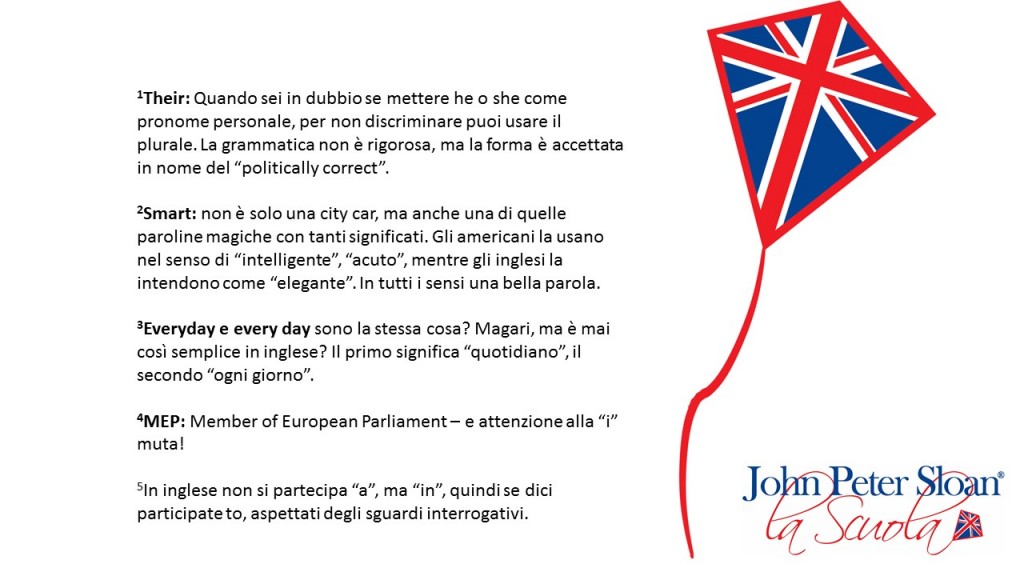
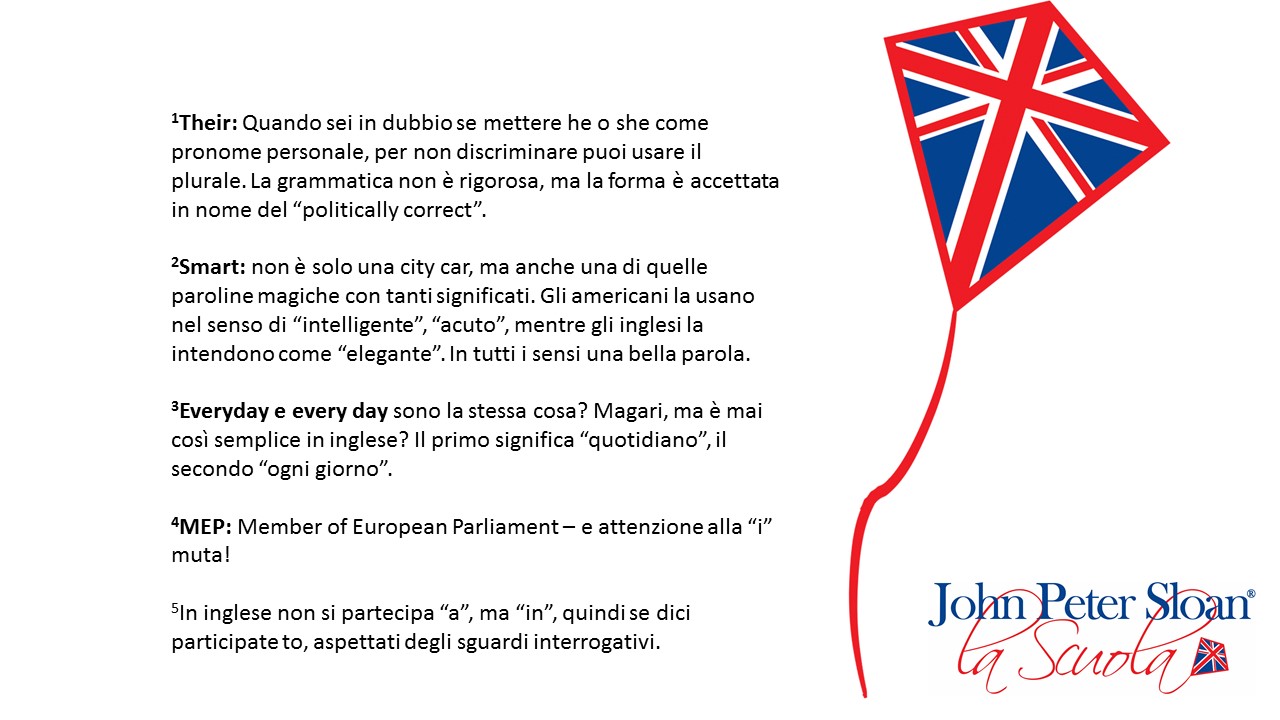
We tried to highlight them with piano C, one of Italy’s first co-working spaces which has been dealing with smart working and its many aspects for some years. “One of the main considerations is the lack of specific boundaries when defining excessive work: because it’s possible to work anywhere and anytime, managers may take for granted that you will always answer requests in real time. Also, a worker who doesn’t have to clock in and out may actually never stop working to achieve their(1) goals”, they explain. Another point to consider is the risk of becoming insulated from everyday office dynamics: “If there are few smart(2) workers in a company, this means that the majority of their colleagues are physically in the office and the smart workers may get left out of everyday(3) office life and possibly experience setbacks in their career paths”.
Of course, none of these are unsurmountable problems: good time management and realistic goals can easily counter the risks of work burnout.
Since remote working was introduced, health and safety standards were set to guarantee the worker’s safety and wellbeing, with workstations that must comply with ergonomic and electrical safety standards and requirements.
MEP(4) Alessia Mosca, promoter of a law proposal on smart working, doesn’t so much talk about risks as “possible consequences that can be curbed or avoided with adequate regulation. The first that comes to mind is the possible isolation of the worker from the working context, which can be a problem for the employer, in terms of human resource coordination, and for the employee in terms of thwarted career opportunities. For this reason, our proposal calls for a maximum 50 percent of the total work time to fall under the smart working request”.
Only last week Alessia Mosca participated(5) in a smart working discussion panel in the context of an event she promoted herself. From this panel emerged “a need to change the narrative”, she explained, “removing gender-specificity from this form of work and telling the story of what it actually is, a need everybody – men and women – has to conduct more sustainable lives”.
The MEP appreciates the indications of the Italian financial programming law: “the law proposal follows the indications we gave last January almost entirely, so I can only be happy about this”.
In relation to the risks of smart working and the wellbeing of workers abroad, solutions have already been found some years back.
For example, in 2013 the French Ministry for women’s rights and the observatory for parenting in companies signed the “charter for work-life balance” together with 16 companies; this was a list of rules aimed at avoiding burnout stress and at striking a good balance between working hours and personal time. Among the specific indications are “preserve reasonable working hours” and “do not yield to the instantaneous character of email messages”.
As for Italy, Mosca adds: “I know that many companies, mostly multi-nationals for the time being, are addressing this issue. This is not surprising as the data on work related burnout are disquieting and should make us think about the society we have built and its sustainability. We should take our own time back, and we should start by using technology in a way that answers this need, so that it serves us and not the opposite”.